Start here
Coimbra fado vs Lisbon fado
What Coimbra fado is, who sings it and why it sounds different from the fado of Lisbon, with the facts a first-time listener needs before booking a concert.
Book the concert ↗Quick answer
Coimbra fado is the fado of the city's students: traditionally sung by men in black academic dress, at night, to a Coimbra guitar and a classical guitar, in the manner of a serenade. Lisbon fado grew in the capital's old neighbourhoods and is the style most visitors know. They share the Portuguese guitar and a mood of longing, but differ in setting, dress, repertoire and the guitar itself. A Coimbra concert gives you the student style in about 50 minutes.
The short answer
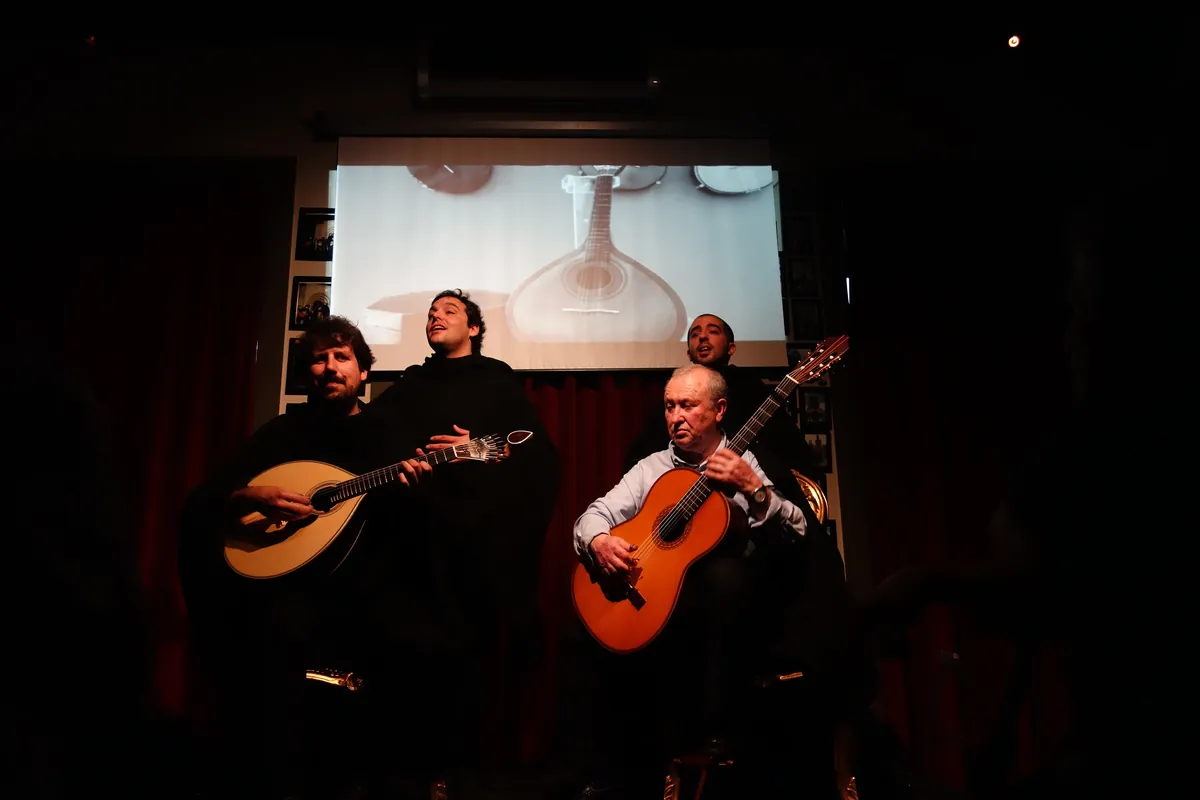
Coimbra fado is a regional style of fado that grew up around the city's students and is still tied to them. Wikipedia calls it a genre of fado originating in Coimbra, adopted by students and sometimes known as student fado, though usually considered the typical music of Coimbra itself. Lisbon fado is the capital's style and the one most visitors have already heard. Put the two side by side and the differences show first in the guitar, the dress and the setting, and only then in the songs themselves. The rest of this guide takes those differences one at a time.
Where fado came from
According to Wikipedia, fado emerged in the Lisbon of the early 1800s, probably in bohemian quarters like Bairro Alto, Mouraria and Alfama, though the same article warns that its origins are hard to pin down and rival theories exist. The name may come from the Latin fatum, fate. In 2011 UNESCO added Fado, urban popular song of Portugal, to its Representative List of intangible heritage. Its description speaks of communities in Lisbon, so read the inscription as recognition of fado in general and not of the Coimbra style by name.
Why Coimbra has a style of its own
Wikipedia says there are two main varieties of fado, linked to the cities of Lisbon and Coimbra. It describes the Coimbra variety as traditionally linked to the city's university and to the style of medieval serenading troubadours, and says it developed from the Iberian lyric tradition of trovadorismo popular in the Middle Ages. Coimbra has been a university city since the university moved there in 1308, Wikipedia records. The students' association even has a fado section that teaches the genre to musically inclined students, Wikipedia adds, and its fame has led to Coimbra fado groups of students and local people in Lisbon and Porto as well.
What the singers and musicians wear
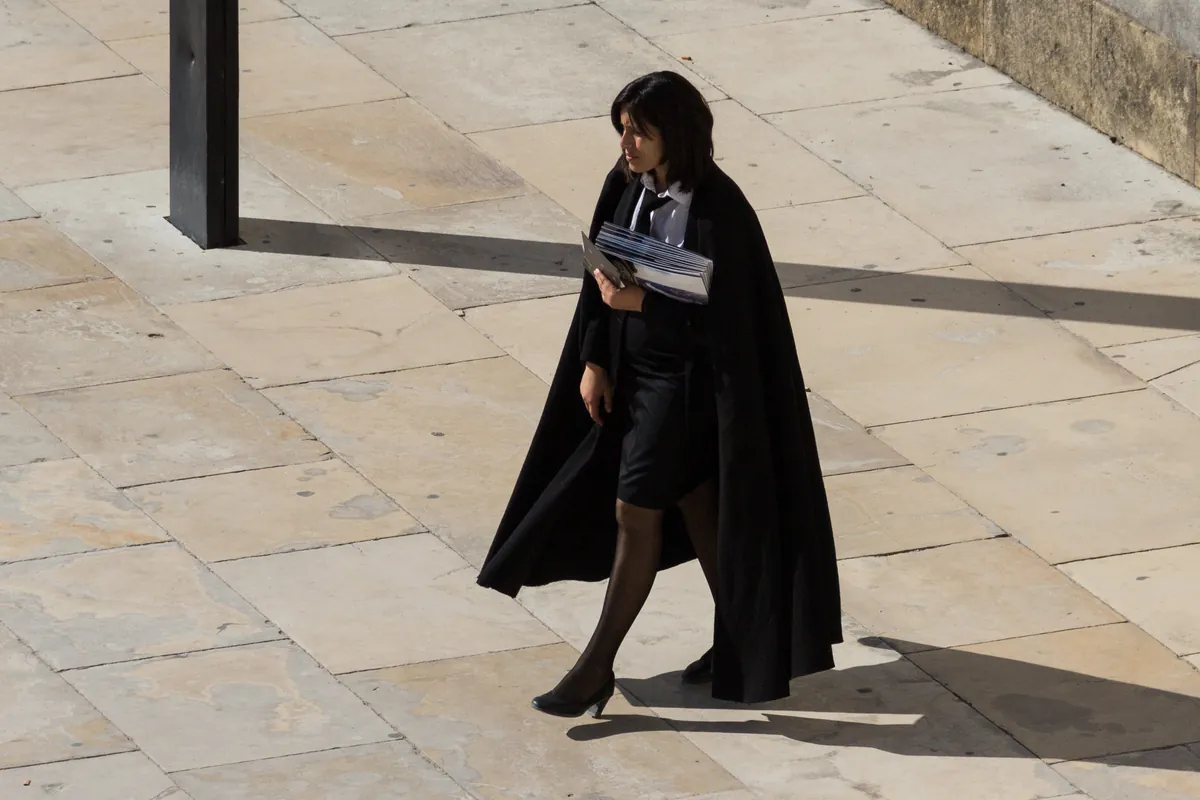
In the Coimbra tradition both singers and musicians wear the academic outfit, the traje académico: a dark robe, a cape and leggings, according to Wikipedia. A Coimbra hotel's guide to the city's fado describes the same black cloak and cassock. The cape therefore belongs to the student tradition and not to the stage. At Fado ao Centro the organisers say that every musician is or was a student in Coimbra, and photographs of the house show the musicians in black capes. When you see the capes in a concert, you are seeing the tradition's own dress.
The guitar that gives it away

Both styles are built around the guitarra portuguesa, which Wikipedia describes as having twelve steel strings grouped in six pairs. It is made in two models, Lisboa and Coimbra, and the article lists how they differ:
- Free string length of 445 mm on Lisboa guitars and 470 mm on Coimbra guitars
- Lisboa guitars tuned in D with a brighter, more resonant sound; Coimbra guitars tuned in C with a darker timbre
- A scroll ornament called the caracol, the snail, on Lisboa guitars; a teardrop-shaped motif, the lágrima, on Coimbra guitars
How the guitar is played
Wikipedia draws a clear line between the two traditions. In Lisbon fado the guitarrista plays an introduction, then answers the singer's phrases in a call-and-response, and in faster fados may improvise throughout. In Coimbra fado, instead of bridging the gap between the singer's phrases, the guitarra plays the chordal accompaniment alongside the acoustic guitar. In practice that points to a guitar that supports the voice and does not trade phrases with it. Wikipedia also contrasts the rapid, more technically challenging Lisbon style with the Coimbra one, which is why the two can sound so unlike each other on the same instrument.
Where Coimbra fado was sung
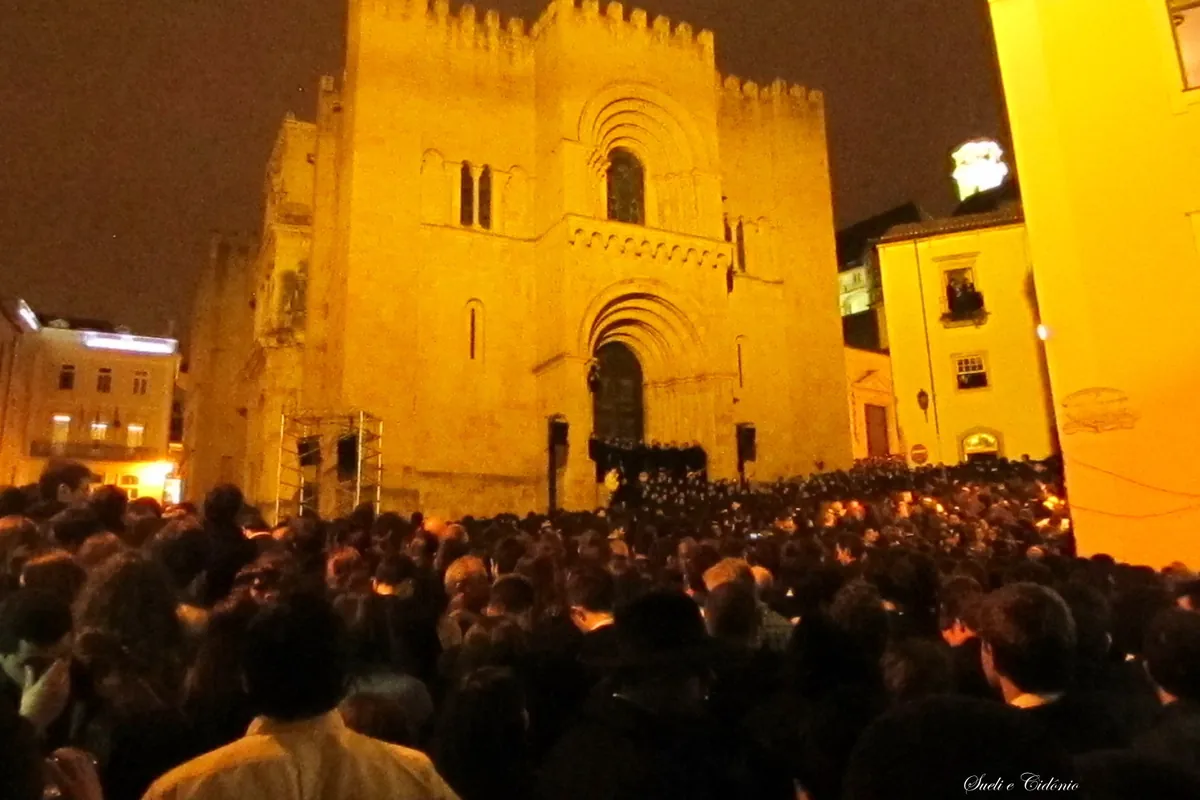
Per Wikipedia, Coimbra fado is sung after dark, nearly in the dark, outdoors in squares and streets, and the steps of the Santa Cruz Monastery and of the Old Cathedral are named as typical places. Serenades are also customary: songs sung beneath the window of a woman someone hopes to court. The hotel guide adds that the hoped-for reward is a light switched on and off three times, and that clapping is not welcome at serenades. UNESCO places fado in concert halls and in small fado houses, and the second of those is closer to a concert in a small room.
Who sings it, and what
Wikipedia says the Coimbra style is sung exclusively by men, in the academic dress, while UNESCO's description of fado in general speaks of a solo singer, male or female. Treat that as a difference of tradition and not a rule about every concert you may attend. Wikipedia names a few of the best-known Coimbra fados by title, among them Balada da Despedida and Samaritana, and says that from the 1950s a new movement led Coimbra singers to the ballad and to the great poets, classical and contemporary. What is played on any night changes.
What a concert in a small house keeps
An indoor concert is a different setting from the night-time street tradition, but it keeps the pieces that define the style: the Coimbra guitar, the classical guitar, the singer and the black capes. Fado ao Centro, on Rua Quebra Costas below the Old Cathedral, is described by its organisers as a cultural project founded in Coimbra in 2010, with walls decorated with the musicians' belongings. The concert adds moments from the city's history between songs and ends with a glass of port tasted with the musicians, which makes it a short, complete introduction to the style.
Who this isn't for
Give this concert a miss if you want dinner and music together: the ticket pays for about 50 minutes of fado and one glass of port, with no food. Pass on it if you want the faster, more technically demanding guitar that Wikipedia associates with Lisbon fado. Skip it if you want a midnight serenade under a window, which is a different, open-air custom. And allow for the street: the upper end of Rua Quebra Costas is a staircase, so the walk up may not suit anyone who cannot manage steps.
Booking
Choose a date on the calendar further down the page. Booked through GetYourGuide, the ticket pays for the concert and one glass of port, and free cancellation holds until 24 hours before. Your host speaks English and Portuguese. Each price appears in your own currency on the calendar, which is why none are quoted in this guide.
Frequently asked questions
What is Coimbra fado?
A regional style of fado from the city of Coimbra, adopted by students and traditionally sung by men in academic dress to a Coimbra guitar and a classical guitar, according to Wikipedia.
How is Coimbra fado different from Lisbon fado?
Coimbra fado is tied to students, serenades and a darker-toned Coimbra guitar that plays chords beside the singer. Lisbon fado is the capital's style, heard in fado houses and on the concert circuit, with a brighter-toned guitar.
Is fado on the UNESCO list?
Yes. UNESCO inscribed Fado, urban popular song of Portugal, in 2011. Its description speaks of communities in Lisbon, so the entry does not single out the Coimbra style.
Do the musicians wear capes?
In the Coimbra tradition they do: dark robe, cape and leggings, according to Wikipedia. Photographs of Fado ao Centro show the musicians in black capes.
Is the concert in English?
The host speaks English and Portuguese. Fado de Coimbra is a Portuguese-language tradition, so expect the songs themselves in Portuguese.
How long is the concert?
About 50 minutes, ending with a glass of port tasted with the musicians.
Is Coimbra fado melancholy?
Wikipedia calls fado in general a music of resignation, fate and melancholy, loosely summed up by the word saudade. Coimbra fado shares that mood, though its serenades are also songs of courtship.
Sources